
How to Request and Evaluate Marble & Travertine Samples
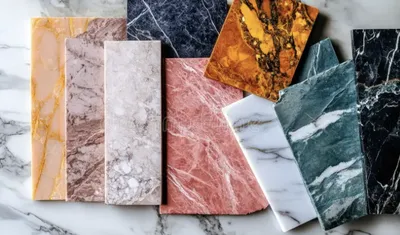
Before confirming a large package of Turkish marble or travertine, it is essential to work with physical samples. Well-prepared samples help architects, contractors and clients understand the true appearance of natural stone long before it arrives on site. This article explains how to request realistic samples from a Turkish stone supplier and how to evaluate them properly.
For a broader overview of available materials you can also read Introduction to Turkish Natural Stones and our Products page, which lists the main marble and travertine types supplied by Atlas Natural Stones, Inc.
1. Decide What Kind of Samples You Really Need
Start by defining the purpose of the samples. Are they for internal design decisions, for client approval, or for final contract confirmation with your Turkish exporter? In many cases you will need more than one type:
- Small reference tiles (e.g. 10×10 cm or 15×15 cm) for quick comparisons.
- Project samples in the final size and thickness of your marble or travertine tiles.
- Finish samples showing polished, honed, brushed or tumbled surfaces.
For travertine projects you may also want to compare cross-cut and vein-cut travertine side by side, as these cuts can look completely different in the same stone.
2. Request Samples from Current Production or Similar Blocks
Whenever possible, ask your supplier to prepare samples from the current blocks or slabs that will be used for your order. If that is not yet possible, request samples from geologically similar blocks in the same quarry and ask the exporter to clarify any differences.
For example, if you are considering Denizli travertine for pool surrounds or terraces, you can refer to Denizli Travertine Overview: Classic, Noce, Silver, Ivory & Walnut and ask the supplier to indicate exactly which variety is being sampled.
3. Confirm the Final Finish and Edge Details
Finishes have a major impact on the look and performance of Turkish marble and travertine. When requesting samples, clearly specify:
- The surface finish: polished, honed, brushed, tumbled, sandblasted, flamed, etc.
- Whether edges should be beveled, eased, tumbled or left sharp.
- Any additional treatments such as resin-filling or anti-slip treatment.
For background, see Understanding Natural Stone Finishes: Polished, Honed, Brushed & Tumbled , which explains where each finish is typically used in floors, walls and exterior areas.
4. Evaluate Color Range and Natural Variation
A single small tile cannot show the full color range of a stone. Ideally you should:
- Request several pieces from different areas of the slab or block.
- Place samples together on a table to understand the overall variation.
- Compare them with photos or videos of full slabs provided by the supplier.
When working with materials such as Mugla white marble or Bilecik beige marble, small variations may be acceptable. For more expressive stones, you should intentionally decide how much veining or movement is desired in the final installation.
5. Check the Structure: Veins, Pores and Fillings
When evaluating samples of marble or travertine from Turkey, take time to study the structure:
- Look for open veins, natural cracks or factory repairs.
- For travertine, examine the size and distribution of natural holes.
- Check the quality of any resin-filling or cement-based filling, if used.
For more detail on this topic, see Resin-Filled vs Unfilled Stones: Pros and Cons and Common Defects in Marble & Travertine and How to Avoid Them .
6. Compare Thickness, Flatness and Edge Quality
Even at sample stage, you can already check basic dimensional quality:
- Measure thickness with a caliper and compare to the specification.
- Place two pieces face to face to check for warping or bowing.
- Inspect edges for chipping or micro-cracks that may appear during cutting.
These checks give an early indication of the factory’s ability to meet Dimensional Tolerances and Standards for Stone Tiles on larger production runs.
7. Review Samples Under Correct Lighting Conditions
Natural stone looks different under daylight, warm artificial light and cool office lighting. Try to evaluate samples:
- Near a window with natural daylight.
- Under typical interior lighting for the project (e.g. warm LEDs).
- At different viewing angles, especially for polished marble and onyx.
For materials used in hotel lobbies or retail spaces, this step is especially important, as lighting design often highlights or softens the natural veining of Turkish marble.
8. Document Approvals Clearly
Once you have selected the preferred marble or travertine sample, record the approval in a clear way:
- Label the approved pieces with project name, date and finish.
- List the chosen material in your specification and drawings.
- Share photos of the approved samples with your Turkish exporter.
You can also combine approved samples with guidance from How to Specify Natural Stone in Architectural Drawings to create a complete technical package for tender or ordering.
9. Move from Samples to a Coordinated Package
After sample approval, the next step is to define quantities, sizes and delivery schedule for the full stone package. At this stage, many project teams review the full range of materials again via the Products page and decide whether other stones from Turkey should be combined in the same project.
If you are unsure how to translate samples into a complete supply package, you can contact Atlas Natural Stones, Inc. directly through the contact form and share your drawings and stone schedule.
Ready to Turn Samples into a Full Stone Package?
Once your marble and travertine samples are approved, Atlas Natural Stones, Inc. can prepare a coordinated offer for Turkish stone slabs, tiles and cut-to-size pieces for your project.
View Stone CollectionQuick Contact
Send us your project details or stone inquiries and we will respond as soon as possible.