
Resin-Filled vs Unfilled Stones: Pros and Cons
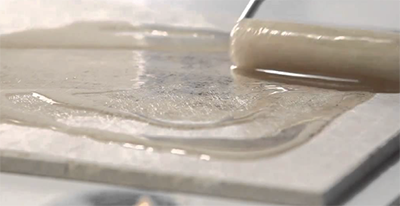
Many architects and contractors encounter the terms resin-filled and unfilled when specifying marble and travertine from Turkey. The decision affects appearance, performance and cost, especially for porous stones such as Denizli travertine.
This guide explains what resin filling is, why Turkish factories use it, and how to decide whether filled or unfilled stone is right for your project. For a broader overview of quality and classification, see Quality Grading & Selection in Turkish Marble and Travertine.
1. What Does Resin-Filled Stone Mean?
Resin-filled stone has had its natural pores, micro-cracks or cavities partially filled with an epoxy or polyester resin in the factory. The process is common for:
- Travertine from Denizli – Classic, Noce, Silver, Ivory and Walnut.
- Some Turkish marbles with open veining or minor fissures.
During production, the sawn slabs are dried, the resin is applied and vacuumed into the pores, then the slabs are cured and polished. The result is a smoother, more continuous surface that still reads as natural stone.
2. Why Use Resin Filling in Travertine and Marble?
The main reasons Turkish factories and exporters recommend resin treatment are:
- Improved structural integrity for brittle or heavily veined stones.
- Smoother surface that is easier to clean and maintain.
- Reduced chipping on edges of tiles and cut-to-size pieces.
- Enhanced polish on some marbles and dense travertines.
In high-traffic commercial projects using Turkish marble, travertine or limestone, resin filling is often a practical way to combine natural beauty with better durability.
3. Resin-Filled vs Unfilled Travertine
Travertine is the classic example where the filled vs unfilled choice is most visible:
Resin-filled & honed travertine is typically used in:
- Indoor floors and walls where a smooth surface is needed.
- Retail, hotel and office interiors that must be easy to maintain.
- Contemporary designs looking for a cleaner travertine look.
Unfilled & tumbled travertine is typical for:
- Outdoor terraces and pool surrounds with rustic character.
- Traditional or Mediterranean-style projects.
- Areas where slight water retention in voids is acceptable.
For an introduction to popular Turkish travertines, explore Denizli Travertine Overview: Classic, Noce, Silver, Ivory & Walnut.
4. Pros of Resin-Filled Stones
Resin-filled marble and travertine offer several advantages when supplied by a reliable Turkish stone exporter:
- Better workability: Less breakage during cutting and installation.
- Improved hygiene: Fewer open pores where dirt and liquids can accumulate.
- Visual continuity: Voids are toned to match the stone, providing a more uniform look.
- Higher yield: Blocks that would otherwise be too open can be used effectively.
In polished marble floors, resin treatment is almost standard for certain types, aligning with the quality expectations of international hospitality and retail projects.
5. Pros of Unfilled Stones
Unfilled stones are still widely used for aesthetic and technical reasons:
- Natural character: Voids and pores express the geological origin of the stone.
- Better grip: In tumbled finishes, unfilled travertine can offer more slip resistance.
- Traditional look: Suits rustic villas, garden paths and historic restorations.
- Lower factory processing cost: Although installation and sealing must be considered.
The decision between filled and unfilled should be made together with layout, finish and use. For more on finishes, see Understanding Natural Stone Finishes: Polished, Honed, Brushed & Tumbled.
6. Maintenance Considerations
Both resin-filled and unfilled surfaces still require proper sealing on site. Resin reduces porosity but does not make marble or travertine completely stain-proof. Good cleaning practices and the right sealer are essential to protect Turkish natural stone over time.
Open pores in unfilled travertine may require periodic re-grouting or re-filling depending on traffic and exposure. Discuss maintenance expectations with your client early in the design stage.
7. What to Discuss with Your Stone Supplier
When you request quotations from a Turkish marble and travertine supplier like Atlas Natural Stones, Inc., it helps to clarify:
- Whether you prefer filled, unfilled, or a mixture depending on area.
- Which finish (polished, honed, brushed, tumbled) you need for each space.
- Expected traffic levels and slip-resistance requirements.
- Any specific standards or project specifications to follow.
Clear, early communication allows the factory to plan production correctly and minimizes surprises once the stone arrives on site. To understand typical quality ranges and selection levels, refer to Quality Grading & Selection in Turkish Marble and Travertine.
If you are at the stage of comparing different stone families, you may also find Choosing Between Marble, Travertine, Limestone and Granite useful as a broader decision-making guide.
Need Advice on Filled vs Unfilled Stones?
Share your project drawings and area schedule. Atlas Natural Stones, Inc. can recommend where to use resin-filled marble or travertine and where unfilled, tumbled stones may be more suitable.