
Handling & Cutting Marble and Travertine Safely
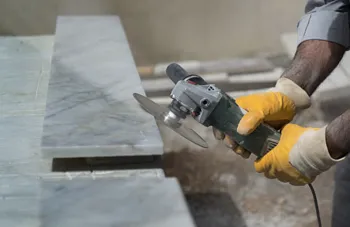
Marble and travertine are beautiful but delicate natural stones, and improper handling or cutting can lead to breakage, chipping, worker injury, or loss of valuable material. Whether you are working with Turkish marble slabs or travertine tiles, following the correct safety and handling procedures is essential.
This guide outlines the recommended best practices used by professional installers, contractors and suppliers like Atlas Natural Stones.
1. Always Handle Stone with Proper Equipment
Marble and travertine slabs should never be lifted manually. Use appropriate lifting tools such as:
- Stone clamps and lifting dogs
- Vacuum lifters
- A-frame slab carts
- Pallet jacks for crate movement
Improper manual lifting can lead to injuries or sudden slab failure. For information about how stone arrives on site, visit: Crates, Bundles & Pallets: Packing Systems for Natural Stone
2. Store Stone Properly Before Cutting
Stone must be kept upright using A-frames or racks. Tiles should remain in their crates until needed. Incorrect storage can compromise the structural integrity of both marble and travertine.
Read more: Best Practices for Storing Natural Stone on Construction Sites
3. Use the Correct Blades and Cutting Tools
Diamond blades designed specifically for marble or travertine are essential. Using the wrong blade increases chipping and creates dangerous kickback.
- Wet saws for precision cuts
- Bridge saws for slab cutting
- Angle grinders for edge detailing
Always check blade condition before cutting.
4. Cut Stone with Adequate Water Cooling
Marble and travertine should always be cut using water-cooled systems. Water reduces dust, cools the blade, and results in cleaner cuts. Dry cutting generates excessive dust and increases the risk of overheating and cracking.
5. Prevent Chipping During Cutting
To minimize chipping on polished edges:
- Use a sharp blade appropriate for the stone
- Cut slowly to avoid vibration
- Support the stone fully at all times
- Finish edges by honing or chamfering when needed
6. Wear Personal Protective Equipment (PPE)
Proper PPE is non-negotiable when cutting marble and travertine. Workers should use:
- Safety goggles or face shields
- Cut-resistant gloves
- Hearing protection
- Steel-toe boots
- Respiratory protection, especially during dry grinding
7. Understand the Stone’s Internal Structure
Travertine has natural voids and veins, while marble has directional veining that affects cutting direction. Cutting against the natural grain increases breakage.
Learn more about vein direction: Understanding Vein Direction in Marble & Travertine
8. Inspect Stone After Cutting
Look for edge fissures, micro-cracks or chips immediately. Addressing defects early avoids issues during installation.
Conclusion
Safe handling and precise cutting of marble and travertine ensure better installation outcomes, fewer losses, and a safer work environment. Combined with reliable sourcing from trusted Turkish suppliers, proper techniques help deliver exceptional results in both residential and commercial projects.
Looking for High-Quality Turkish Stone?
We supply marble, travertine, granite, limestone and onyx for installations worldwide.
Quick Contact
Send us your project details or stone inquiries and we will respond promptly.