
From Quarry to Factory: How Turkish Blocks Become Slabs
Turkey is one of the world’s leading producers of natural stone, supplying marble, travertine, granite, limestone and onyx to global markets. Understanding how stone moves from the quarry to the factory—and finally becomes polished slabs—is essential for architects, contractors and distributors working on international projects.
This article explains the complete journey, from block extraction to final slab finishing. For an overview of Turkey’s natural stone families, see our Introduction to Turkish Natural Stones.
1. Extracting Natural Stone Blocks in Turkish Quarries
Turkish marble and travertine quarries use advanced machinery such as wire saws, chain cutters and diamond blades. Each quarry is known for specific stones—such as Afyon White, Burdur Beige, Tundra Grey, Milas Lilac and Honey Onyx.
- Blocks are separated from the mountain using controlled cutting
- Large benches are divided into transportable block sizes
- Quality is evaluated on color, clarity, structure and veining
Once cut, blocks are moved using heavy loaders and prepared for shipment to factories across Turkey.
2. Transporting Stone Blocks to Processing Factories
Blocks travel by truck from quarry regions such as Afyon, Denizli, Burdur, Muğla, Elazığ and Diyarbakır. At the factory entrance, each block is inspected, numbered and recorded for traceability.
For projects requiring consistent tone—such as Limra limestone facades or Marmara Equator striped marble—multiple blocks are selected from the same quarry section.
3. Cutting Blocks into Raw Slabs
At the factory, blocks are placed into gang saws or multi-wire cutting machines that slice the block into slabs. Thickness is usually:
- 20 mm (most common)
- 30 mm (premium & countertop applications)
Onyx, decorative marbles and fragile stones may be reinforced with mesh backing. For more on slab vs tile selection, see Slabs vs Tiles vs Cut-to-Size Pieces.
4. Drying, Epoxy Treatment & Reinforcement
After cutting, slabs are dried and may undergo epoxy resin filling or mesh reinforcement to improve strength. This is commonly applied to:
- Travertine (void filling)
- Onyx (translucent reinforcement)
- Stones with micro-fractures
The resin process ensures stability during transport and fabrication.
5. Polishing and Final Surface Finishes
Slabs are polished using automated lines to achieve finishes such as polished, honed, brushed or antiqued. Learn more about finishes in: Understanding Natural Stone Finishes.
Each slab is then:
- Numbered
- Color-matched
- Sorted by block series
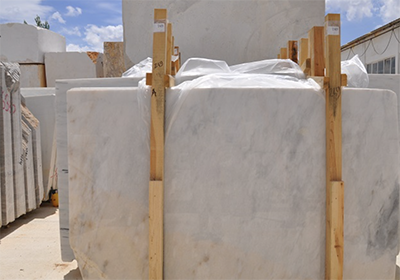
- Packed in metal or wooden bundles for export
6. Preparing Slabs for Export
As a Turkish stone exporter, Atlas Natural Stones, Inc. ensures slabs are properly dried, packed and loaded to avoid moisture and breakage during ocean freight.
For coordination of your project schedule or to source slabs directly from Turkish factories, visit our Products page or contact us via the contact page.
Source High-Quality Turkish Marble, Travertine & Onyx Slabs
Atlas Natural Stones, Inc. supplies slabs directly from leading factories across Turkey—cut from selected blocks and prepared for global projects.