
Anti-Slip Treatments for Exterior Stone Areas
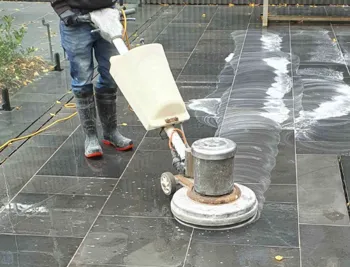
Exterior surfaces made from Turkish marble, travertine, limestone, basalt and granite are commonly used in pool decks, terraces, walkways, gardens and public open spaces. While natural stone is durable and visually appealing, polished or smooth finishes can become slippery when wet.
This guide explains the most effective anti-slip treatments for exterior stone applications and how to choose the right method depending on stone type and project requirements.
1. Surface Texturing Techniques
Mechanical surface treatments increase the friction level of natural stone. Common methods include:
- Sandblasting – Creates a uniformly rough surface suitable for walkways and terraces.
- Bush-hammering – Produces a hammered texture ideal for high-traffic public spaces.
- Flaming – Works well on granite and some hard limestones, offering excellent slip resistance.
You can read more about these finishes here: Sandblasted, Bush-Hammered & Flamed Finishes
2. Chemical Anti-Slip Treatments
Chemical etching solutions react with the stone surface, creating micro-texture that improves slip resistance without significantly altering appearance. These solutions are commonly used on:
- Light-colored marbles
- Travertine
- Limestone
Chemical treatments are especially useful for pool surrounds and outdoor residential areas where the design must remain visually smooth.
3. Choosing the Right Finish by Stone Type
Marble: Works well with sandblasted and brushed finishes. Polished marble should never be used outdoors in wet climates.
Travertine: Tumbled, brushed or sandblasted travertine provides excellent slip resistance, especially in pool decks. Learn more here: French Pattern Travertine Terraces and Pools
Limestone: Bush-hammered or sandblasted limestone is ideal for exterior pathways and facades with exposed areas. Related reading: Limra Limestone for Facades
Granite: Flame-finished granite is one of the safest natural stones for wet outdoor environments.
4. Sealing and Maintenance
After applying any anti-slip treatment, sealing helps protect the surface from weathering and moisture penetration. Regular cleaning also prevents algae buildup, which can make any surface slippery.
For more on moisture behavior in stone: Porosity, Absorption & Moisture in Natural Stone
5. Where Anti-Slip Treatments Are Most Important
- Pool decks
- Garden paths
- Urban walkways
- Hotel & resort exteriors
- Commercial entrances
- Rooftop terraces
Conclusion
Anti-slip treatments are essential when using Turkish marble, travertine, limestone, granite or basalt in exterior applications. By choosing the right finish and maintaining it properly, outdoor stone surfaces remain safe, functional and beautiful.
Need Natural Stone for Your Outdoor Project?
We supply premium Turkish marble, travertine, limestone, granite and basalt for exterior applications worldwide.
Quick Contact
Send us your project details or stone inquiries and we will respond as soon as possible.